
What Is the Key Difference Between Custom Aluminum Profile Processing and Standard Profile Purchasing?
When evaluating a large-volume project, many companies face the same question early on: should they opt for custom aluminum profile processing or purchase standard profiles directly? It may seem like just a difference in purchasing method, but it can affect costs, lead times, assembly efficiency, and even future maintenance.
In simple terms, purchasing standard profiles is better suited to projects with established specifications, stable requirements, and tight delivery schedules. Custom aluminum profile processing is better suited to high-volume solutions with complex structures, stringent precision requirements, or a need to improve overall assembly efficiency. Neither option is inherently better; the key is choosing one that aligns with the project’s objectives.
This choice is particularly important in applications such as industrial automation, equipment manufacturing, and smart warehousing. If the wrong profile is selected, subsequent drawing revisions, rework, repurchasing, and production line stoppages can cost far more than the initial savings.
The Main Advantages of Standard Profile Purchasing Are Speed and Reliability
The greatest advantages of standard profile purchasing are readily available specifications, an established supply base, and a full range of compatible accessories. Common industrial aluminum profiles such as 2020, 3030, 4040, 4080, 6060, and 8080 are widely available, making purchasing decisions more straightforward.
For equipment frames, workbenches, safety enclosures, and conveyor supports with finalized drawings, standard profiles usually save time. Profiles and accessories such as corner brackets, bolts, nuts, and casters can be selected together, reducing communication and selection costs.
From a procurement risk perspective, another advantage of standard profiles is their greater interchangeability. Even if orders are expanded later or modifications are made to specific sections, it is easier to continue using the original specifications without reopening molds or adjusting the entire process.
- Faster delivery, suitable for projects with tight deadlines.
- Transparent purchasing, making it easier to compare quotes from multiple suppliers.
- Relatively convenient maintenance and expansion later on.
- Typically lower inventory turnover pressure.
However, standard profiles have clear limitations. They are more of a “general-purpose solution” than necessarily the “optimal solution.” If a project has more demanding requirements for hole positions, tolerances, assembly cycle times, or appearance consistency, purchasing standard profiles alone may still require additional cutting, drilling, tapping, or even secondary assembly.
The Value of Custom Aluminum Profile Processing Goes Beyond Non-Standard Designs
When people hear “custom aluminum profile processing,” their first thought is often, “Is it only needed for non-standard structures?” Not necessarily. Experienced procurement and technical teams see custom aluminum profile processing as a way to improve overall efficiency, not simply as a machining operation.
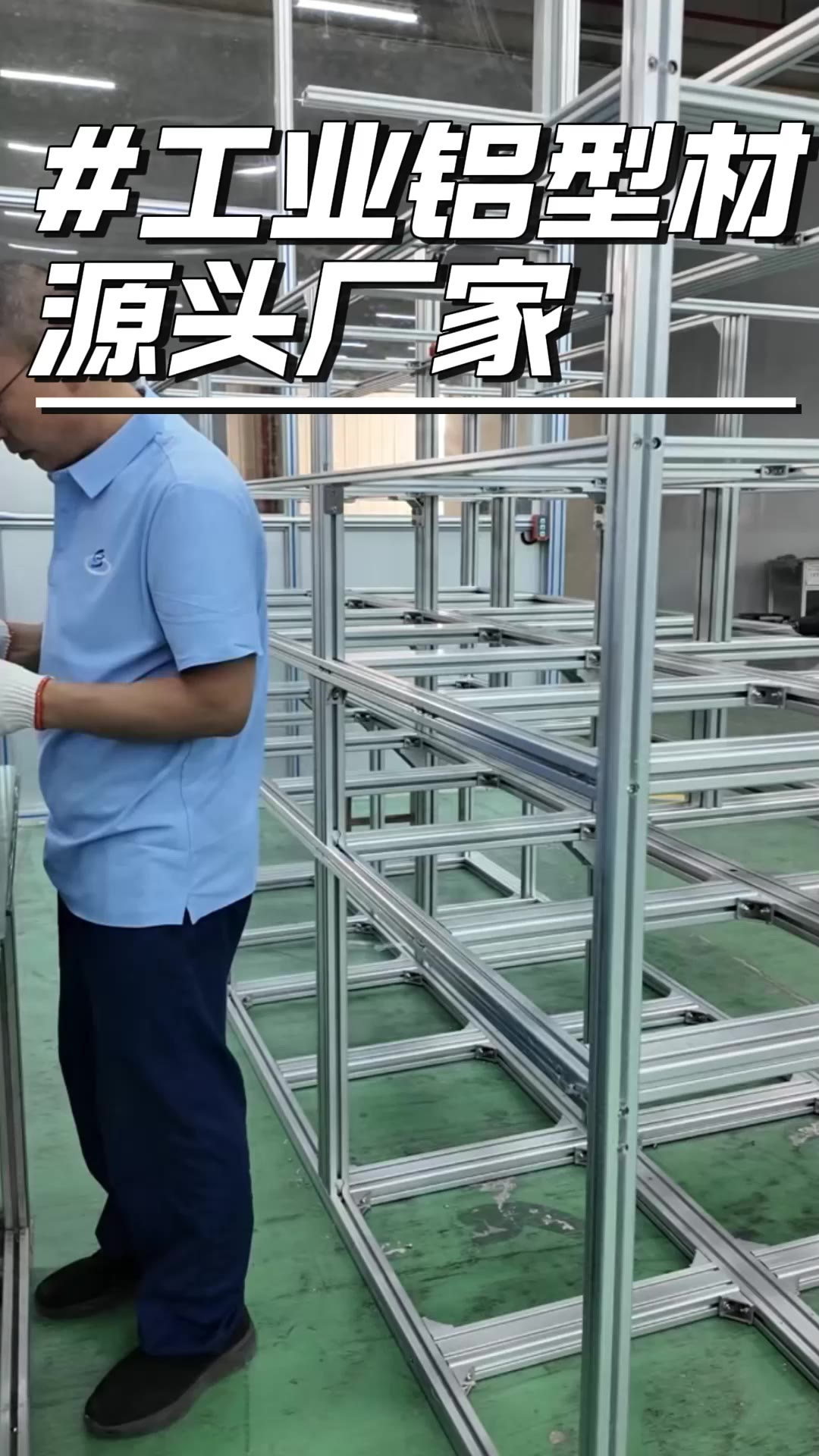
For example, if profiles for an equipment frame are cut, drilled, tapped, CNC-machined, and surface-treated before leaving the factory, on-site installation time can be significantly reduced. For high-volume projects, this improvement in assembly cycle time is often more important than differences in material unit prices.
Similarly, some automated production lines, safety enclosures, and robot bases require high levels of structural consistency and assembly precision. In these cases, custom aluminum profile processing can reduce human error and lower the likelihood of on-site rework.
- Better suited to drawings and actual application requirements.
- Can reduce secondary processing on-site.
- Helps improve consistency in high-volume assembly.
- Suitable for projects with specific precision and process requirements.
That is why more and more equipment manufacturers are including custom aluminum profile processing in their upfront cost calculations for volume orders, rather than waiting to address problems after they occur on-site.
How to Choose for a High-Volume Project: Start with These Four Factors
In practice, when choosing between standard profile purchasing and custom aluminum profile processing, it is advisable to first consider four key factors. Once these are clear, the decision is unlikely to be far off the mark.
1. How Tight Is the Delivery Schedule?
If the project needs to be completed quickly and the structure is not complex, standard profile purchasing is usually the more practical choice. Stock specifications are established, accessories are readily available, and response times are typically faster.
However, if on-site processing capabilities are limited or the installation window is very short, custom aluminum profile processing may actually save time. Doing more work upfront can make the later stages much easier.
2. Are You Looking at Unit Price or Total Cost?
This is where evaluations are most likely to be misleading. The unit price of standard profiles may appear more straightforward, but total cost includes more than just materials—it also covers processing, transportation, assembly, rework, downtime, and maintenance.
If a high-volume project requires repeated cutting and drilling, and on-site labor is expensive, custom aluminum profile processing may not cost more; it could actually lower the total cost.
3. How Finalized Are the Drawings?
If the drawings are still being revised frequently, it is safer to use standard profiles for trial assembly first. They allow greater flexibility and lower adjustment costs, making them suitable for validating the design.
If the drawings are finalized and future orders can be replicated, the value of custom aluminum profile processing increases significantly. The more stable the volume project, the more suitable it is to standardize the upstream processes.
4. How Capable Is the On-Site Assembly Team?
If the installation team is experienced, has the right tools, and works in a stable environment, standard profile purchasing offers greater flexibility. Conversely, if on-site staffing is limited or process control is weak, custom aluminum profile processing can help reduce the error rate.
Which Applications Are Better Suited to Custom Aluminum Profile Processing?
Recent project trends show that the following applications are increasingly likely to use custom aluminum profile processing, and are becoming more common.
- Automated equipment frames with complex hole patterns and connection arrangements.
- Safety enclosures with stringent dimensional consistency requirements.
- Conveyor lines and workstations requiring fast, high-volume assembly.
- New energy and medical equipment, where appearance and precision are more critical.
- Non-standard equipment with irregular structures or special load-bearing requirements.
In these applications, custom aluminum profile processing is about more than simply “doing some work” on the profiles. It means considering the materials, structure, connection methods, and assembly efficiency together. This makes subsequent production more controllable and increases the potential for reusing the solution in future projects.
Standard Profile Purchasing Is Not a Conservative Choice; It Is a Proven One
It is worth emphasizing that choosing standard profiles does not mean the solution is outdated. For many established production lines, standard workstations, and modular support frame projects, the standard components system is itself a highly efficient solution.
For example, common 4040, 4080, and 2040 profiles are widely used for equipment frames, guardrails, and workbenches. A commonly used profile such as XD-6-2040 can often balance strength, cost, and delivery speed when it is suitable for the structure.
An even clearer indication is that many projects do not ultimately choose just one option. Instead, they use “standard profiles as the main solution, supplemented by custom processing where needed.” This type of combined solution often offers a better balance between budget control and shorter lead times.
When Making a Decision, Don't Overlook the Supplier's One-Stop Capabilities
Whether you choose standard profile purchasing or custom aluminum profile processing, the supplier's capabilities directly affect the outcome. This is especially true for high-volume projects, where the real differentiator is often not the quotation but the ability to organize and deliver the work.
A one-stop supplier with capabilities in R&D, extrusion, precision processing, accessory integration, and frame assembly can identify structural issues early and reduce downstream rework. This is particularly important for projects with tight lead times, multiple batches, and a wide range of specifications.
Take Shanghai Xiangda Industrial Aluminum Profiles Co., Ltd. as an example. The company focuses on industrial aluminum profiles and application-specific solutions, supplying profiles to Chinese national and European standards, as well as accessories such as corner brackets, connectors, sealing strips, and casters. It also provides cutting, drilling, tapping, CNC machining, surface treatment, and assembly services.
For projects requiring drawing-based customization, non-standard development, batch processing, or urgent delivery, this type of service system makes it easier to coordinate procurement, engineering, and production schedules and avoid repeated communication between intermediate stages.
Conclusion: The Right Choice for a High-Volume Project Depends on What Matters Most to You
If the project's primary objectives are rapid implementation, transparent costs, and convenient future maintenance, standard profile purchasing is usually more suitable. If the project places greater emphasis on structural fit, processing precision, assembly efficiency, and consistency across batches, custom aluminum profile processing offers greater advantages.
The most reliable approach is to assess drawing maturity, delivery pressure, on-site assembly conditions, and total cost together rather than looking only at material unit prices. This is how you can choose an industrial aluminum profile solution that is truly suited to a high-volume project.
If your project is currently at the solution evaluation stage, it is advisable to first review the structural requirements, processing steps, and delivery milestones, and then decide whether to purchase standard profiles directly or introduce custom aluminum profile processing in advance. The sooner the decision is clarified, the more time and cost can be saved during execution.
Related News
- ▶ Moving Forward Together, Achieving Shared Success | On October 10, Shanghai Xiangda Industrial Aluminum Profiles welcomed customers and partners for a visit and inspection
- ▶ Why Do Custom Aluminum Extrusion Die-Opening Prices Vary So Widely? What Are the Key Factors Affecting the Quote?
- ▶ How to Choose Between 6063 and 6061 Alloys for Custom Aluminum Extrusion Dies?
Leave a Message Online

Thank you very much for writing to us. Please leave your message and contact information, we will reply to you within 24 hours.