
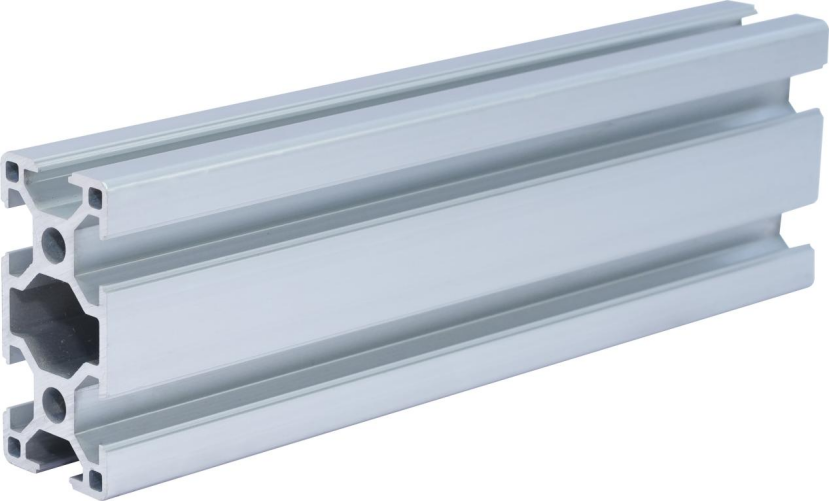
In-Depth Analysis of Custom Aluminum Profile Die Design and Extrusion: Wall Thickness, Tolerances, and Die Life
Custom aluminum profile die design is a key focus for technical evaluators, as it directly determines critical parameters such as wall thickness, tolerances, and die life. This article takes an in-depth look at the process to help you precisely assess customized solutions and improve efficiency and cost performance.
Is Custom Aluminum Profile Die Design Worth It? The Three Questions Technical Evaluators Care About Most
For technical evaluators, designing a die for a custom aluminum profile is not just a technical decision—it is also a trade-off between cost and time. What you really want to know is not “How complicated is the die-design process?” but “Will the die last? Can the tolerances meet assembly requirements? Is the wall thickness design appropriate?”
The feasibility of a custom die project comes down to three factors: die life determines amortized cost, wall thickness design affects structural strength, and tolerance grades determine the difficulty of subsequent assembly. Overlooking any one of these factors may result in rework or uncontrolled costs.
Shanghai Xiangda Industrial Aluminum Profile Co., Ltd. has worked in the industry for many years. In developing custom profiles, we always put the practical needs of technical evaluators first. Let’s move straight to the process details you care about most.
Wall Thickness Design for Custom Aluminum Profiles: Thicker Isn’t Always Better, and Thinner Isn’t Always Cheaper
Wall thickness is one of the first parameters to determine when designing a die for a custom aluminum profile. Many engineers fall into the “thicker is safer” trap, but excessive wall thickness not only increases material costs; it also makes extrusion more difficult and accelerates die wear.
From an extrusion-process perspective, 6063-T5 aluminum alloy is the most commonly used material for industrial aluminum profiles, with a recommended wall thickness typically between 1.5mm and 4.0mm. This can be increased as needed for profiles with large cross-sections or high load requirements, but thicknesses exceeding 6mm require a special assessment of the die structure and press capacity.
Wall thickness design must also account for uniformity. If there is a large difference in local wall thickness across the profile—for example, 3.0mm on one side and 1.2mm on the other—the metal flow rate may vary significantly during extrusion, causing the profile to twist or bend and potentially even crack the die.
When preparing a design, technical evaluators should prioritize cross-sections with uniform wall thickness and smooth transitions. If a substantial variation in thickness is unavoidable, adding a radius or gradual transition in the transition area is recommended. This can significantly extend die life and improve the finished-profile yield rate.
How Should Tolerances Be Set? How Custom Aluminum Profiles Differ from GB and European Standards
Tolerance control for custom aluminum profiles is a common source of disagreement among technical evaluators. Many are accustomed to applying the GB/T 5237 or European EN 755 standards directly, but tolerance management for custom profiles has its own specific considerations.
For standard industrial aluminum profiles such as 4040 and 4080, dimensional tolerances are typically within ±0.5mm. However, because custom profiles have more complex cross-sections, die-machining precision and extrusion-deformation control are more challenging, and tolerances for some dimensions may be relaxed to ±0.8mm or even ±1.0mm.
The key is not the tolerance value itself, but which dimensions are “functional dimensions.” For example, the width of a slot used to install a track or guide must be tightly controlled, while tolerances on the profile’s exterior decorative surfaces can be more relaxed.
Technical evaluators are advised to clearly identify critical dimensions and reference dimensions on drawings and specify reasonable tolerance ranges. This helps die designers and extrusion engineers control the process more precisely and avoid repeated die modifications or scrapping caused by blanket tolerance requirements.
For custom die projects, Shanghai Xiangda confirms tolerance priorities with customers individually to ensure that critical mating dimensions meet expectations while keeping production costs under control.
How Long Will a Die Last? The Key to the Cost of Custom Aluminum Profile Die Design
Die life directly affects the amortized cost of custom aluminum profiles. If a die can extrude only a few thousand kilograms, the die cost per kilogram of profile will be high. If it can consistently extrude tens of thousands of kilograms, the cost advantage is considerable.
Factors affecting die life include profile cross-section complexity, wall thickness uniformity, die steel quality, heat-treatment process, and extrusion ratio. For example, dies used to produce 6063 aluminum alloy profiles on commonly used 3-ton to 6-ton extrusion presses typically last between 10 and 30 tons of production.
For overly complex custom profiles with slender cantilevers, deep grooves, or thin walls, stress-concentration points in the die are prone to fatigue cracking, significantly shortening its life. When designing profile cross-sections, technical evaluators should try to avoid sharp internal corners, excessively narrow grooves, and asymmetrical cantilevers.
Well-designed dies combined with suitable extrusion processes can extend die life by more than 30%. Using staged heating, controlling extrusion speed, and optimizing die feeder-hole design, for example, can all effectively extend die life.
Customers with small-batch requirements can consider standard profiles made with established dies, such as XD-8-4040B, to avoid die costs. For large-volume custom projects, it is advisable to budget appropriately for the die and select more durable die steel and heat-treatment processes.
Custom Aluminum Profile Extrusion: Key Control Points from Billet to Finished Product
The extrusion process directly determines the mechanical properties and surface quality of a profile. Technical evaluators do not need to master extrusion-press operation, but understanding the key control points helps them communicate efficiently with suppliers.
Billet temperature is the first key parameter. The extrusion temperature for 6063 aluminum alloy is typically between 480℃ and 520℃. Excessive temperature can cause grain coarsening, affecting profile hardness and surface finish; insufficient temperature makes extrusion more difficult and can lead to die blockage or profile cracking.
Extrusion speed control is equally important. Because custom profiles have complex cross-sections, they are generally extruded more slowly than standard profiles, typically at 5m/min to 15m/min. Excessive speed can cause uneven metal flow, resulting in defects such as waviness and twisting.
Cooling and quenching should not be overlooked. The profile must be rapidly cooled after exiting the press to retain the aluminum alloy’s solution-treated condition in preparation for subsequent artificial aging. Uneven cooling can result in inconsistent profile hardness or deformation.
The final step is stretching and straightening. Profiles may develop slight bending and twisting after extrusion and need to be straightened using a stretching machine. A stretch ratio of 1%–3% is recommended; excessive stretching can change the profile’s cross-sectional dimensions.
How Can Technical Evaluators Assess the Feasibility of a Custom Die方案?
When you receive a drawing for a custom profile, you can quickly assess it using the following steps:
First, check whether the cross-section contains a closed cavity. Closed cavities require porthole-die extrusion, which involves a complex die structure, higher costs, and shorter die life. If possible, consider changing the closed cavity to an open structure or forming it through subsequent machining.
Second, assess the wall-thickness ratio. The maximum-to-minimum wall-thickness ratio should preferably not exceed 3:1; otherwise, extrusion becomes extremely difficult and the yield rate is low.
Third, confirm the tolerance requirements for functional dimensions. For mating surfaces, tolerances should preferably be controlled within ±0.3mm; for decorative surfaces, ±0.5mm is generally sufficient. Avoid demanding excessively tight tolerances for every dimension.
Fourth, confirm with the supplier how die costs are allocated. Many aluminum profile manufacturers offer a “die fee refund” policy, under which all or part of the die fee is refunded once order volume reaches a certain tonnage. This can effectively reduce the upfront investment for small-batch customization.
Fifth, consider whether an existing die can be used instead. Standard profiles such as XD-8-4040B are made with well-established dies, require no additional die costs, and have shorter lead times. If the differences between a custom profile and a standard profile are minor, it is advisable to consider the standard product first.
Summary: Key Considerations and Recommended Actions for Custom Aluminum Profile Die Design
Custom aluminum profile die design is a systematic undertaking in which wall thickness, tolerances, and die life are interrelated. Technical evaluators should assess a solution’s feasibility from an overall process perspective rather than focusing on any single metric.
Prioritizing designs with uniform wall thickness and simple cross-sections, clearly specifying tolerances for critical dimensions, and selecting an experienced die-design and extrusion team can all significantly improve the likelihood of project success. Standard-profile alternatives should also be considered to find the best balance between cost and function.
Shanghai Xiangda Industrial Aluminum Profile Co., Ltd. provides one-stop services from die design through finished-product delivery. Our technical team can provide professional process assessments and optimization recommendations for your custom projects, helping you precisely evaluate customized solutions and achieve real cost and efficiency improvements.
Related News
- ▶ Moving Forward Together, Achieving Shared Success | On October 10, Shanghai Xiangda Industrial Aluminum Profiles welcomed customers and partners for a visit and inspection
- ▶ Why Do Custom Aluminum Extrusion Die-Opening Prices Vary So Widely? What Are the Key Factors Affecting the Quote?
- ▶ How to Choose Between 6063 and 6061 Alloys for Custom Aluminum Extrusion Dies?
Leave a Message Online

Thank you very much for writing to us. Please leave your message and contact information, we will reply to you within 24 hours.