

For automated machine frames, workshop workbenches, and robot safety fences, many engineers choose **industrial aluminum profiles** to build the frames. Among the many profile sizes available, **4040 European-standard industrial aluminum profiles** are a versatile, go-to choice for building **aluminum profile frames**.
Compared with traditional steel structures, frames made from industrial aluminum profiles require no welding, are easy to assemble and disassemble, and can be reused when production lines are modified. The balanced cross-section of 4040 profiles combines strength with low weight, making them suitable for most small and medium-sized industrial frames.
I. What Are 4040 Industrial Aluminum Profiles?
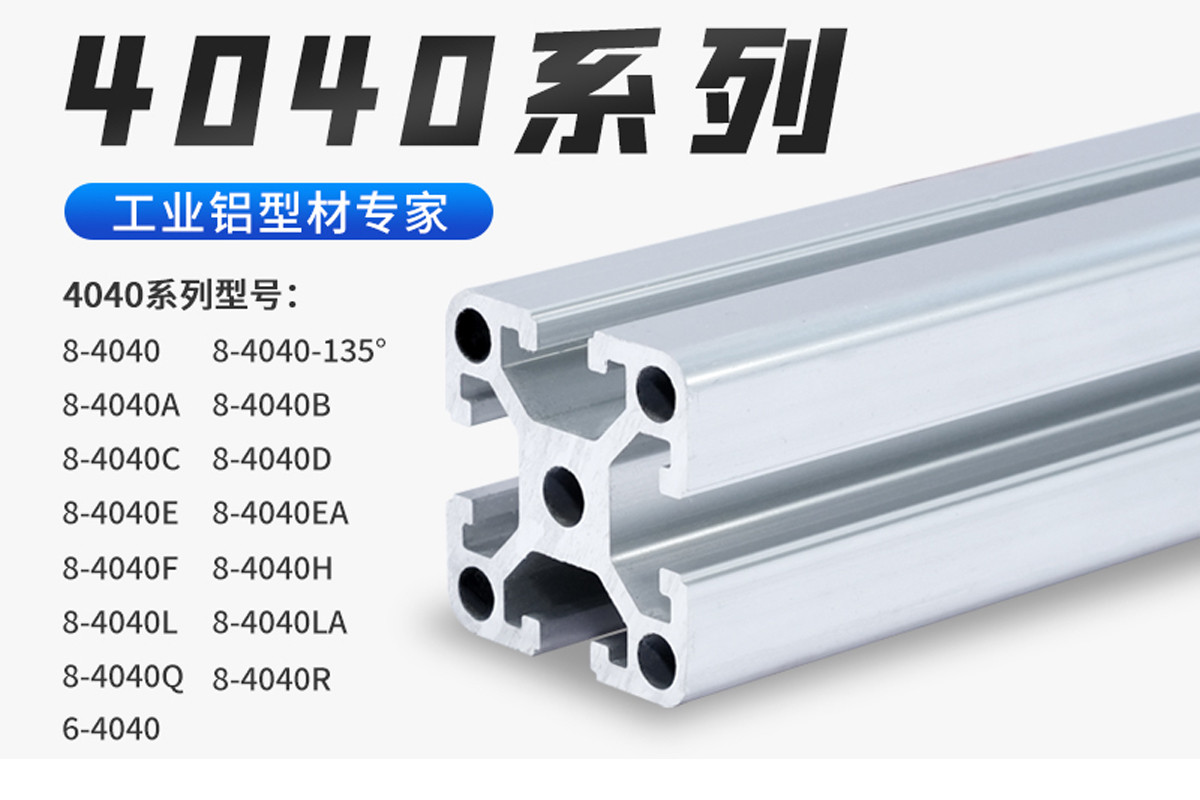
4040 industrial aluminum profiles are European-standard T-slot profiles with a cross-section of 40mm×40mm. They are typically made from **6063-T5 aluminum alloy** and feature an anodized surface that resists corrosion and rust, making them suitable for demanding workshop environments.
Each of the profile’s four sides has a standard T-slot with an 8mm opening. A full range of standardized accessories is available, including T-slot nuts, angle brackets, connecting plates, leveling feet, and end caps.
- Available in light-duty, standard, and heavy-duty wall thicknesses (1.5mm/2.0mm/3.0mm, etc.), so you can select a profile to match the frame’s load requirements
- No welding required; components are assembled using bolts and angle brackets for simple installation
- Cut to size as required; CNC drilling, chamfering, and other secondary machining are available
II. Why Are 4040 Industrial Aluminum Profiles Widely Used for Aluminum Profile Frames?
✅ **Modular construction, flexible adjustment**
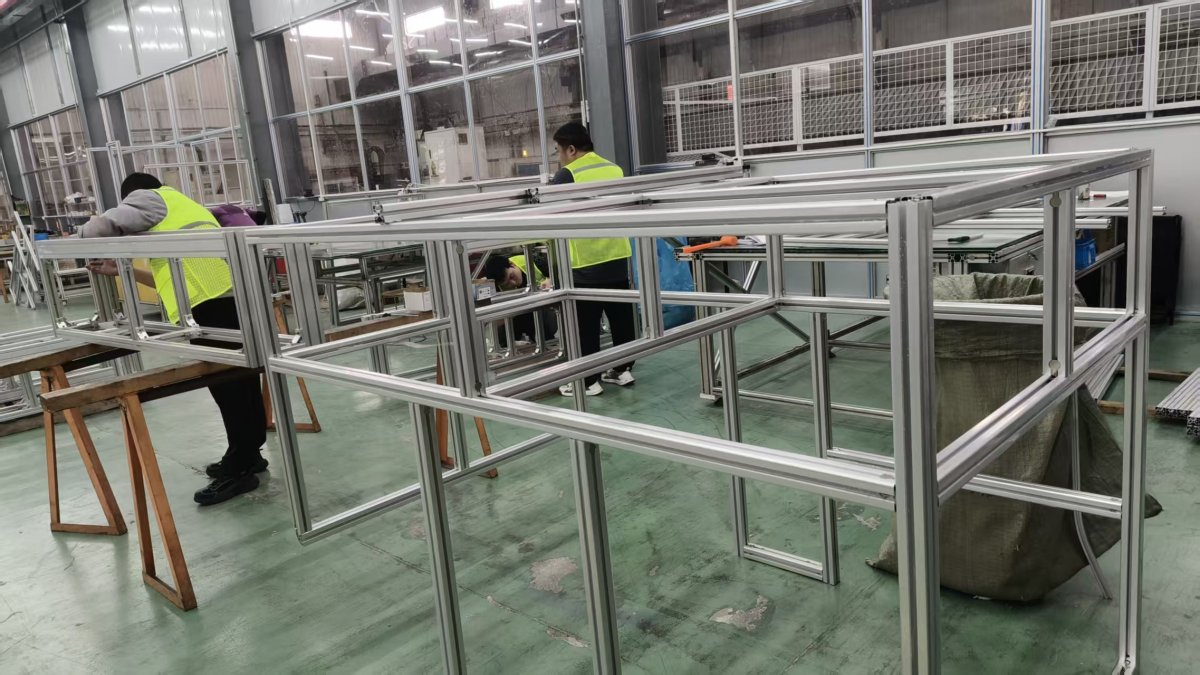
Aluminum profile frames are assembled using T-slot connections, allowing the frame structure to be adjusted at any time. When production lines are upgraded or equipment is modified, simply loosen the bolts and reposition the profiles—there is no need to dismantle and discard the entire structure. Their high reusability makes them ideal for flexible automated production lines.
✅ **Low weight and balanced strength**
Compared with steel structures, aluminum profile frames are much lighter at the same strength, reducing the load on equipment bases. Standard 4040 profiles are strong enough for small and medium-sized machine frames and workbenches. For heavy-duty applications, upgrade to thicker 4040 profiles for a stable frame that resists deformation.
✅ **Clean appearance, no painting required**
The anodized surface has a fine finish and resists peeling, so the frame does not need additional painting after assembly. It provides a neater appearance in workshops and cleanrooms while reducing dust contamination.
✅ **Complete range of accessories for one-stop assembly**
Angle brackets, internal connectors, leveling feet, casters, hinges, sealing strips, cable ducts, and acrylic panel fasteners are all available in a mature system. From profiles to accessories, aluminum profile frames can be designed and assembled in one place.
III. 4040 Industrial Aluminum Profiles | Typical Applications for Aluminum Profile Frames
1. Automated equipment frames: inspection equipment, assembly fixtures, and frames for small equipment units
2. Aluminum profile workbenches for workshops: assembly benches, inspection benches, and anti-static workbenches
3. Robot safety fences: protective frames for factory robots, fitted with safety mesh / acrylic panels
4. Production line supports and conveyor frames: production line support frames and material conveyor supports
5. **Equipment guards, cabinet frames, and laboratory platforms**
> Selection tip: Use thin-wall 4040 profiles for light-duty frames. For equipment bases, frames subject to continuous vibration, and medium-load applications, choose standard / heavy-duty 4040 profiles with a wall thickness of ≥2.0mm. For very large, heavy-duty frames, consider upgrading to heavy-duty 4080 industrial aluminum profiles.
IV. Avoid These Pitfalls When Purchasing Profiles for Frame Construction
❌ Comparing prices alone and overlooking profile wall thickness and material: Low-cost profiles made from recycled aluminum can bend and deform after a period of use. Confirm that the material is primary 6063-T5 aluminum and check the wall thickness.
❌ Using a basic design that does not account for vibration reinforcement: Frames for equipment with motors or continuous vibration need additional reinforcing ribs and heavy-duty profiles to prevent loosening over time.
❌ Buying profiles without all the necessary accessories: Missing angle brackets, nuts, leveling feet, or end caps can halt on-site assembly and delay the project.
> Shanghai Xiangda Industrial Aluminum Profiles supplies 4040 industrial aluminum profiles in stock directly from the factory, with cutting, CNC drilling, and secondary machining available. We can prepare drawings and customize complete aluminum profile frames to meet customer requirements, providing one-stop delivery of workbenches, equipment frames, and robot fences.
V. In Conclusion
Within the industrial aluminum profile range, 4040 profiles have become a popular choice for aluminum profile frames because they are versatile, supported by well-established designs, and cost-effective to modify.
If you are planning automated machine frames, workshop workbenches, or safety fences and need **4040 industrial aluminum profile** samples or an aluminum profile frame solution, contact us for drawings and a quotation.
Related News
- ▶ The Go-To Profile for Aluminum Profile Frames — 4040 Industrial Aluminum Profile for Equipment Frames and Workbenches
- ▶ Moving Forward Together, Achieving Shared Success | On October 10, Shanghai Xiangda Industrial Aluminum Profiles welcomed customers and partners for a visit and inspection
- ▶ Why Do Custom Aluminum Extrusion Die-Opening Prices Vary So Widely? What Are the Key Factors Affecting the Quote?
Leave a Message Online


Thank you very much for writing to us. Please leave your message and contact information, we will reply to you within 24 hours.